
The following is a topic that has intrigued me and frustrated me over my years as a automobile fan. That topic is lighting. Mostly exterior lighting to be fair, and its oddities. Yes, yes, I know what you’re thinking. “This sounds really riveting, Jim. Please tell me more!” I get it. this isn’t a very exhilarating subject matter. Nonetheless, I want to share my thoughts on it, and maybe even educate some readers.
Federal Motor Vehicle Safety Standard 108 (FMVSS 108) dictates most of the rules for lighting in the USA. You can go to the website and search for it here: https://www.federalregister.gov/. But be advised, you will go down a rabbit hole that you may never come back from in an effort to locate the actual standard. Mostly, you’ll find documents from manufacturers applying to have a taillight or headlight design approved. You can also go to the National Highway Traffic & Safety Administration’s (NHTSA) website for more excitement. https://www.nhtsa.gov/. Lastly, you can check out the European regulations here: https://unece.org/transport/vehicle-regulations.
I bring up Europe because, guess what? They have, in some cases, vastly different regulations for vehicle lighting. This creates situations where manufacturers have to produce completely different lighting for cars sold in Europe and the US. I will go over examples of this and let you decide how crazy it all is. Some of it keeps me up at night.
The biggest annoyance, at least to me, is rear turn signals. Europe mandates that the rear turn signal must be amber in color. The reason for this is that studies they have conducted have shown that having an amber turn signal is more visible and discernible as opposed to red. Makes sense, right? Well, the US does not have this stipulation. Amber is okay, and allowed, but it is not required. As a result, we have a mishmash of vehicles here with differing signals. Some manufacturers who sell a particular car all over will just homologate a tail light with amber turn signals and sell that version everywhere. More cost efficient, right? Others will make one tail light for the US market with red turn signals and a separate one with amber for the EU. this seems odd to me as they now have to develop two separate designs and get them approved by each location’s governing body.
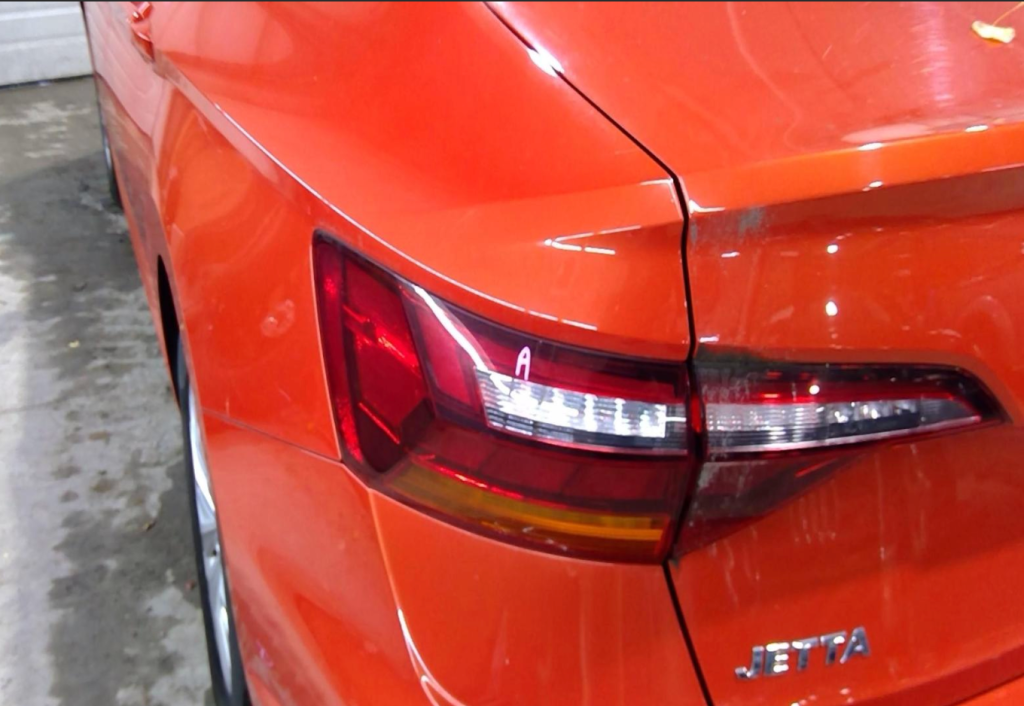
But check out this bit of chicanery. I once owned a 2019 Volkswagen Jetta. VW sells the same car just about everywhere in the world. It had amber turn signals in the rear. You can see this clearly in the pic below. It made perfect sense. One tail light design gets approval in each market and they save some development costs. BTW, this is not my car in the pic. But that color is called Habanero Orange. Awesome! I digress…
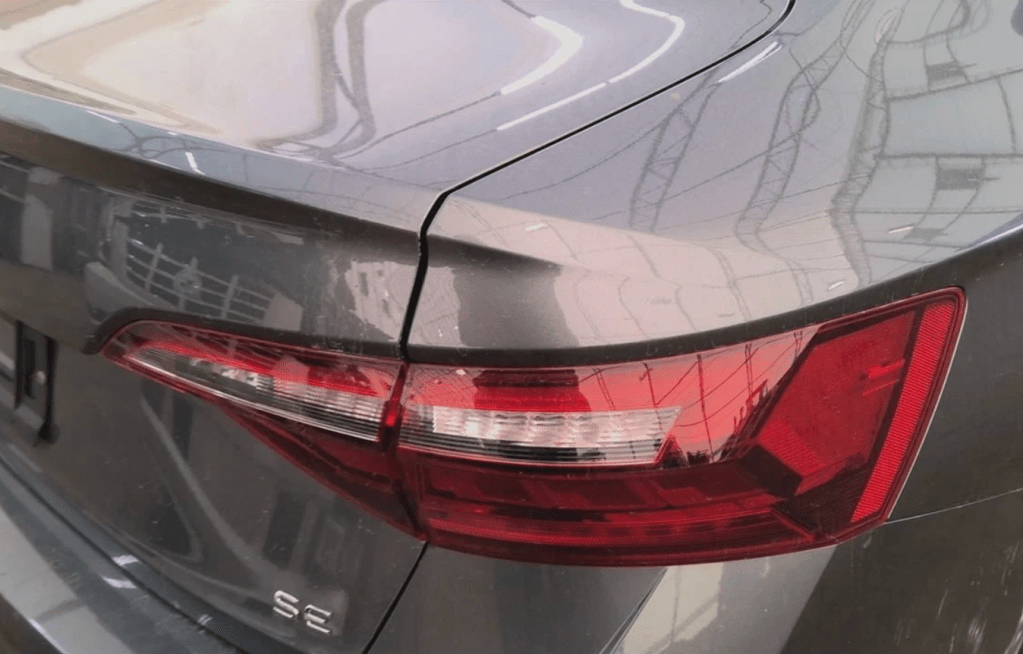
Just one model year later, the same basic car, still sold all over the world, inexplicably lost the amber turn signal in the US. I present exhibit “B” below. Why? They had an approved and perfectly usable design that worked everywhere. They still had to have the previous one for EU countries. Why would they feel the need to have to redesign and get approval for such a minimal change? It had to have added cost for development at least. And they didn’t even keep that part as the turn signal. They removed the LEDs from that section completely and just made the lens red. The turn signals were moved up, and the brake lights now served the dual purpose of brake and turn signals.
Let’s move on to the front of the car. An exceptionally common gripe from motorists is how blinding modern headlights are. What with High Intensity Discharge (HID), LED, and even lasers (yes! I said lasers!!), headlights have become very bright indeed. And whether you are getting blinded in the rearview mirror, or from an oncoming car, it can be a nuisance. Here is an article from Motor Trend about it:
If you want the TLDR, basically, headlights suck. But while the glare is bad, it has not equated to more accidents. And US lighting standards lag far behind the rest of the world. Let’s get into that a bit.
The story also mentions that there is no easy solution. I disagree. As mentioned, US lighting standards are archaic. And while they have been updated slightly in recent years, they are light years away from other world standards. (See what I did there?) For example, the only adaptability allowed is for automatic leveling or directing the light around corners. Nothing for mitigating the blindness caused by them being so bright.
But, Jim, you ask, how can they do that? Seems a bit space aged, no? Well, the Germans have figured it out. Audi with their Digital Matrix LED headlights, and Mercedes with their Multibeam LED system. I’ll share a couple of links below. In a nutshell, both are super bright and illuminate the night like no other system. But, by using the car’s other systems that detect pedestrians, oncoming vehicles, and roadsigns, the light can shift and move in all manner of ways. This keeps the light where you need it and out of the eyes of those that don’t. It really is pretty remarkable. Plus, they can create awesome light shows when leaving or approaching your car. Necessary? Nope. Fun? Absolutely!
Here is a video of Audi’s most recent iteration. Notice how not only does it bend the light around things in the way, it can also project images on the road to assist the driver, and illuminate pedestrians on the roadside for better safety without blinding the pedestrian. Is some of it just showing off? Yep! But it is still pretty cool.
Now for Mercedes. This video is a bit longer and more technical. But it really shows the capabilities of these types of systems.
Once again, neither of these systems is legal in the US based on the current regulations. There is scuttlebutt going around that the regs might finally be updated. But I’m not holding my breath. Oddly, Audi sells cars with this system here in the US. They can, and do, disable the fancy parts with software. So, at least they didn’t have to develop an entirely different system for here. And, if you’re resourceful, and a bit techie, there are ways to hack it and turn on the full system. You didn’t hear that from me…
I could go on about all manner of other lighting. Like the etymology of the Center High Mounted Stop Light, or CHMSL, for instance. But I think I have bored you all enough for one post. Perhaps a part 2 could come around someday. Until then, I’ll rest easy knowing that you will now be subconsciously scoping out turn signal colors. I’m devious in that way.
 Jimperfections